
Anúncios
Building a strong LinkedIn profile can open many doors. It leads to mentorship, referrals, and important professional collaborations across different fields.
An optimized LinkedIn profile showcases your social proof, latest achievements, and your unique value. This makes you stand out to recruiters and potential partners.
To make your LinkedIn profile more visible, choose your connections wisely. Focus on getting support from advocates and experts in your field.
Consider trying LinkedIn Premium features like InMail. This can help you reach out more and find new opportunities faster.
Begin by reviewing your headline and summary. Make sure they follow LinkedIn’s best practices and include searchable keywords.
Ensure your photo looks professional. List achievements that can be measured, and keep your experience section updated. This reflects your recent roles and their impact.
Stay active by engaging with posts and groups. Always aim to help others first. Remember, having quality connections is more valuable than having a lot of them for future success.
Understanding the old way versus the new way of professional networking
Job seekers used to send resumes directly to HR. They relied on job boards and recruiters’ one-way contacts. This method often missed showing how well a candidate might fit.
Local meet-ups and quick elevator pitches were the main ways to connect. These were useful but had limited reach. Rarely did they lead to lasting partnerships.
Today’s approach focuses on building connections first. Using a detailed LinkedIn profile, professionals showcase their skills and achievements. This helps show the real impact they can make.
Being active online is now crucial. By sharing posts and getting endorsements, professionals increase their visibility. This works across different fields.
Key LinkedIn profile tips improve how easily you’re found. A standout headline, detailed summary, and current job roles are vital. These elements help recruiters and potential partners notice you.
It’s important to interact in meaningful ways. Offer support, ask smart questions, and provide value before asking for anything. This approach builds strong, useful networks.
Expand your digital presence to reach more people. Your headline, summary, and keywords can boost referrals and opportunities. This is how you get noticed more often.
Engaging in webinars and LinkedIn groups takes your networking global. Consistently sharing content and hosting online events also builds your reputation over time.
Statistics reveal networking leads to better job placements and longer stays. Encourage others to recommend you and to endorse your skills. This enhances your LinkedIn profile’s credibility.
Rather than one-off job applications, focus on building connections continuously. Keep track of your interactions, ask for introductions, and effectively use LinkedIn’s features. This strategy transforms casual connections into solid partnerships and job offers.
| Old Way | New Way |
|---|---|
| Cold resumes and job boards with limited context | LinkedIn presence that conveys skills, results, and social proof |
| Local events and sporadic follow-up | Virtual events, groups, and consistent content for scalable reach |
| One-way outreach and transactional asks | Two-way engagement focused on offering value first |
| Dependence on HR postings | Discoverability through linkedin profile optimization and referrals |
| Low visibility for passive candidates | Higher visibility via posts, endorsements, and a keyword-led headline |
Workflow for creating a LinkedIn profile that builds your professional network
Begin by reviewing your current profile. Check your photo, headline, summary, experience, and skills. Make sure everything is up-to-date and matches the job you want.
Then, look into the keywords that will make you stand out. Look at job descriptions and top profiles in your area. Use suggestions from LinkedIn’s search to help with this.
Choose a professional photo and a relevant background image. Create a headline that is easy to understand and find. Use terms that highlight your role and value.
Your summary should talk about your achievements in the first person. Show your worth and invite others to connect. Keep it simple and real, like you’re telling a story.
Make your work experience stand out by showing results. List your main skills and get endorsements. This will help your profile be more noticeable over time.
Update your profile often and take part in the LinkedIn community. Share posts, comment on news, and join events. Reach out to others to grow your network.
Lastly, decide which LinkedIn tools fit your goals. Consider if LinkedIn Premium or a professional writer is worth it. Choose what helps you connect with more people.
Key options for LinkedIn profile tools and services
Deciding on the best linkedin profile tools begins with one question: should you update it yourself or get help from a pro? LinkedIn itself helps you quickly connect and get noticed. Yet third-party services offer more in-depth help and save time for those who are busy.
Going for LinkedIn Premium means you can message people outside your network through InMail. It also lets you see more data, like who’s viewed your profile. The Basic version is free, allowing you to message direct contacts and maintain your network without spending anything.
With LinkedIn Learning, you can take courses on how to network, brand yourself, and improve your profile. You can download lessons on your phone, making it easy to learn anytime, anywhere.
Some services will hire experts to refine your linkedin profile. They work on your headlines, your summaries, and where to place keywords. Their goal? To help you get noticed faster and contacted by recruiters more often.
| Name | Role | Main Benefit |
|---|---|---|
| LinkedIn Basic | Free profile and networking | Access to connect and message first-degree connections; essential profile visibility |
| LinkedIn Premium | Paid account with InMail | Ability to send InMail to members you’re not connected with; advanced insights and profile views |
| Profile optimization services | Professional writers and consultants | Expert linkedin profile writing and headline crafting to improve searchability and response rates |
| LinkedIn Learning | Educational platform | Courses on networking, personal branding, and profile best practices; offline course downloads for mobile learning |
Think about what you’ll gain from each option in terms of getting noticed and saving time. Small businesses and individual freelancers might benefit most from paying for profile help. But if you’re actively looking for work, Premium could be a good investment.
Try a mix of strategies. Use LinkedIn Learning to improve your skills. Use the platform’s everyday features for outreach. And consider hiring profile experts if you’re in a rush to climb up in search rankings. This strategy offers diverse ways to boost your professional presence.
linkedin profile: essential sections to optimize for search visibility
Make each section of your LinkedIn profile a chance to display your relevance and worth. Use eye-catching images, smart word choices, and real accomplishments. This way, your profile will grab the attention of hiring managers and potential partners quickly.
Profile photo and background image
Choose a high-quality headshot that shows you as professional yet friendly. A simple backdrop and proper lighting enhance recognition and trust at first sight.
For your background, select an image that reflects your field or personal brand. This could be a photo of your product, office, or a color theme related to your brand. Fresh visuals make your profile more noticeable and attract more connections in searches.
Headline with keywords
Craft a headline that clearly states your role plus a benefit. Start with your job title, briefly mention how you add value, and include key search terms that recruiters look for.
Stay away from unclear terms like “seeking opportunities.” A headline that’s easy to find and explains what you offer enhances your profile’s visibility.
LinkedIn profile summary
Begin your summary with an engaging hook that states what makes you valuable. Emphasize your big wins, like how you increased sales or improved efficiency, in percentages or numbers.
End with a direct call to action for networking, advice, or partnership offers. Also, weave in strategic keywords naturally to catch both readers’ and search algorithms’ eyes.
Experience, skills, and endorsements
List your experiences with clear outcomes and numbers. Explain your work, tools you used, and what you achieved in a way that’s easy for hiring teams to understand.
Fill your skills section with keywords that align with job postings and recruiter searches. Getting endorsements and recommendations further validates your skills and improves your visibility.
Pro tip: spread out your keywords in your headline, summary, experience, and skills sections. This enhances your profile’s searchability without it feeling overloaded with terms.
LinkedIn profile headline strategies to attract recruiters and partners
Making your headline strong boosts your visibility fast. A good LinkedIn profile headline shows your job and what you achieve in just one sentence. Small changes can increase attention and bring better quality connections.
Use role + value formula
Mix your job title with a clear result. For instance, “Product Manager — Driving 30% ARR growth” shows both your role and its impact. This method makes your value clear in search results, helping with LinkedIn profile optimization.
Include searchable keywords
Choose words recruiters search for like “SaaS growth,” “data engineering,” or “UX research.” Add one or two important phrases at the start of your headline. This helps LinkedIn’s system and recruiters find you quicker. Using these tips smartly can raise your profile’s visibility.
Differentiate with specialization
Highlight a unique area that sets you apart from others. Terms like “remote engineering leadership” or “enterprise SaaS growth marketing” showcase your unique skills. A targeted headline with the right keywords boosts your profile’s optimization and attracts more fitting connections.
Try out different headlines for two weeks and see which brings more messages. Make sure your wording is simple, clear, and appealing to recruiters. Following these tips can change casual glances into valuable conversations.
Crafting a LinkedIn profile summary that converts connections into relationships
Start by stating who you are and the value you bring. This strong first sentence grabs the attention of recruiters, partners, and peers. It sets the scene for your entire LinkedIn profile summary.
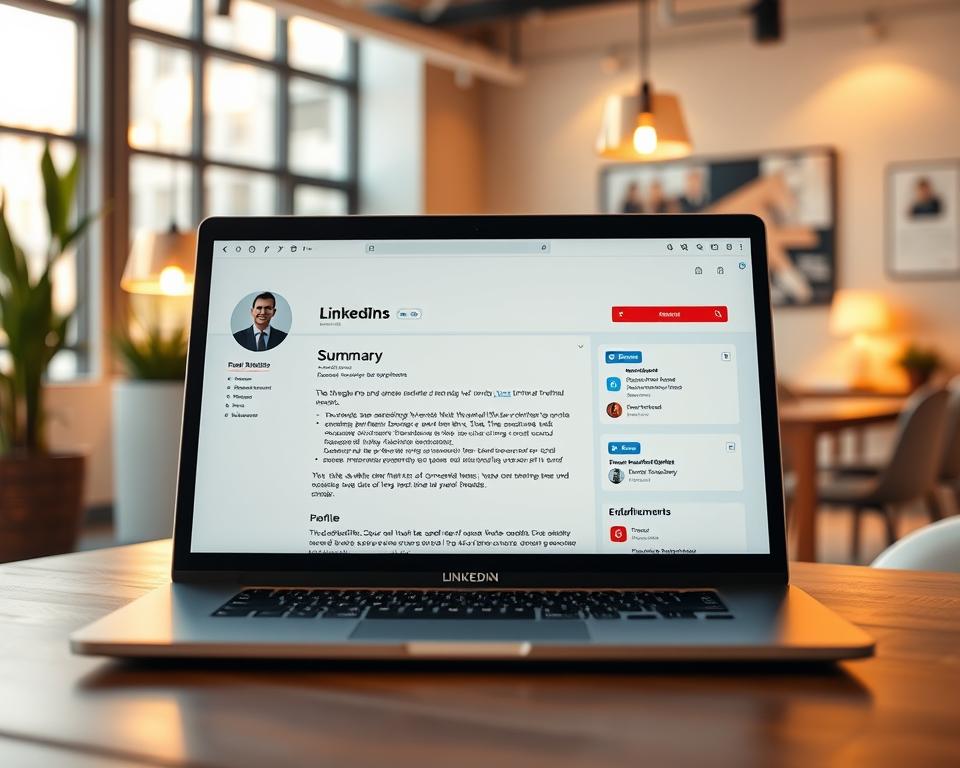
Show your worth with solid examples of what you’ve achieved. Mention how you’ve increased revenue, saved costs, or got more people to use a product. Using real numbers makes your profile more convincing and trustworthy.
Finish with a clear invitation to get in touch. Ask readers to connect for advice, collaborations, or quick discussions on strategy. Make it easy by saying how to reach out, keeping networking straightforward and purposeful.
Lead with a strong opening sentence
In one sentence, share what you do and the results you achieve. Doing this helps your LinkedIn summary catch eyes on all devices.
Use measurable achievements
Include two to three specific examples of your success with numbers. Sharing improvements in percentages, dollar amounts, or the size of teams you’ve managed provides instant credibility.
Call to action for networking
End with a clear, single request and how you prefer to be contacted. A precise ask encourages people to move from just looking to taking action, showcasing excellent LinkedIn profile writing.
LinkedIn profile keywords and SEO best practices
Using targeted keywords makes your profile stand out. They should be terms hiring managers and clients type when looking. Mix job titles, tools, and specific skills for a precise list of keywords. This helps match searches on LinkedIn.
Research techniques
Look at job postings from big companies to find common phrases. Check successful LinkedIn profiles in your area for key terms in headlines and summaries. LinkedIn’s search suggestions are a good shortcut for finding more keywords.
Where to place keywords
Put key terms in your headline, summary, and under experience. Also, add them to your skills and seek endorsements that reflect these skills. This helps your profile show up in searches by recruiters and LinkedIn’s search algorithms.
Balance readability and optimization
Your writing should flow naturally. Keep keywords in strategic spots, but don’t overdo it. Recruiters prefer clear, easy-to-read profiles over ones jammed with too many keywords.
Measure and iterate
Monitor how well your keywords perform with LinkedIn’s analytics. See which ones get your profile noticed and adjust as needed. Regular updates can enhance your visibility and search rankings on LinkedIn.
| Focus Area | Action | Expected Result |
|---|---|---|
| Headline | Include 1–2 priority keywords plus role and value | Higher match rate in recruiter searches |
| Summary | Weave three to five linkedin profile keywords into a readable pitch | Better impressions and longer profile views |
| Experience | Use bullets with measurable outcomes and keywords | Improved relevance for role-specific searches |
| Skills & Endorsements | List top skills with exact keyword phrasing | Stronger profile signals and recruiter filtering |
| Analytics | Track impressions, views, and search appearances monthly | Data-driven edits to optimize linkedin profile SEO |
Networking tactics that amplify your LinkedIn profile visibility
A strong profile catches eyes. Regular, smart engagement changes views to connections. Follow clear routines based on linkedin profile tips and linkedin profile best practices to make interactions meaningful.
Engage daily with content
Comment insightfully on posts from leaders like Satya Nadella or Arianna Huffington to share your view. Share articles with your own brief insights to benefit your network. Reshare interesting content and tag folks, adding your own useful context.
Attend and follow events
Take part in LinkedIn’s webinars, conferences, and meetups. Follow speakers and other participants after. Send a personal message about the event to kick off conversations.
Create value-first outreach
Help out before seeking help. Offer resources, make relevant introductions, or share tips that align with someone’s goals. This builds trust, making your requests more welcomed later on.
Build your network focusing on three types: supporters who share your work, connectors to key players, and experts who add to your credibility. Follow linkedin profile tips for reaching out and use linkedin profile best practices for keeping a good mix.
See what works best. Try out various commenting styles, message formats, and ways to follow up after events. By doing small, regular tasks, you can improve how far your LinkedIn profile reaches over time.
Measuring efficiency: data-driven advantages of an optimized LinkedIn profile
An optimized LinkedIn profile offers clear benefits. It increases how often people see your profile, interact with it, and how it helps with hiring. By tracking your LinkedIn profile’s performance, you can see its value and make it even better. Experiment with your headline, summary, and how you connect with others.
Even small tweaks can make your profile more popular quickly. Sharpen your headline, use important keywords, and keep your visuals up-to-date. This draws more attention and leads to your LinkedIn. Keep an eye on who’s finding you and how, so you can keep improving.
Reaching out in a personal way gets more replies and meetings. Messages that show you value the other person do better. Track the success of your messages. Then, use what works to send better messages more often.
Building a stronger network can make hiring easier and faster. Knowing someone in common helps a lot more than applying cold. Watch how many interviews turn into job offers, and how quickly you can hire. This shows how good LinkedIn can be for finding the right people.
Put together a dashboard that tracks your profile, messages, and network growth. Set goals and check how you’re doing each month. This makes sure your LinkedIn activities help you meet your business goals, and you get into good habits.
The table below shows how improving your LinkedIn profile can lead to better results. It also lists the best ways to make those improvements.
| Outcome | Typical Uplift | Key Actions | Measure |
|---|---|---|---|
| Profile views | 20–80% increase | Optimize headline with keywords, refresh profile photo, update background | Search impressions, profile views per week |
| Connection rate (inbound) | 15–50% increase | Use keyword-rich summary, list specialized skills, add media | Inbound requests, accepts per 100 impressions |
| Response rate to outreach | 30–120% increase | Personalize messages, reference mutual contacts or content | Reply rate, meeting acceptance rate |
| Interview-to-offer ratio | 10–40% improvement | Leverage referrals, highlight measurable achievements, ask for introductions | Offers per interviews, time-to-offer |
| Time-to-hire | 15–35% reduction | Prioritize outreach to warm leads, maintain active follow-ups | Days from first contact to hire |
LinkedIn profile best practices for maintaining and growing your professional network
Staying active on LinkedIn keeps you in the spotlight and builds trust. Regular updates inform recruiters and colleagues that you’re keeping up with industry changes. It’s important to share content regularly but avoid too much sharing.
Regular updates and content cadence
Make it a habit to post short, helpful updates weekly. Update your profile whenever you gain new experience, work on projects, or earn certifications. A few changes to your summary or headline can boost your visibility and adjust your LinkedIn profile for new objectives.
Nurture connections with follow-ups
After meetings or when you meet someone new, send a quick message to check in. Sharing articles that interest your contacts or offering introductions can strengthen your network. These actions keep your connections strong and can lead to mutual support.
Be selective and strategic
Focus on building a network of quality connections rather than having many you don’t interact with. Keep a list of contacts you engage with often. This approach makes using LinkedIn tips for outreach easier and helps maintain valuable, lasting relationships.
Here’s a simple plan to incorporate these strategies. It will help you plan updates, set reminders, and review your LinkedIn profile to improve it gradually.
| Action | Frequency | Outcome |
|---|---|---|
| Update headline and summary | Quarterly | Improves discoverability and reflects current goals |
| Post value-first content | Weekly | Builds authority and keeps you top-of-mind |
| Check-in with key contacts | Monthly | Maintains relationships and opens collaboration chances |
| Review endorsements and skills | Biannually | Ensures relevant skills display and boosts recruiter interest |
| Prune inactive connections | Annually | Keeps network manageable and engagement meaningful |
Evaluating premium features and third-party tools for LinkedIn profile optimization
Start by doing a little test on your own LinkedIn profile. Try some changes and see how many people visit your page. Then, think about whether the cost of LinkedIn Premium or hiring someone is worth it based on your results.
When you can’t find someone to introduce you, LinkedIn Premium and InMail can help. With InMail, you can message hiring managers and potential contacts directly. And Premium lets you see more data and makes your profile more visible, helping you see how changes to your profile affect your search presence.
Using professional LinkedIn profile writing services makes upgrading your profile faster. Experts write headlines and summaries that attract more recruiters. They use tools to see which keywords get your profile noticed, so they can fine-tune your words for better results.
Try updating your profile’s headline and summary briefly. Watch how it affects your profile views and if you get more connection requests over two to four weeks. Then, you can decide if LinkedIn Premium or professional help is worth it.
- Use LinkedIn Premium to get better analytics and more InMail credits.
- Get help from professionals for top-notch LinkedIn profile writing.
- Use tools to check how well certain keywords are doing.
When thinking about cost vs. benefit, consider how much time you save versus the expense. Look at how much more attention you get from recruiters, the interviews you land, or the business leads you gain. For many, spending a bit on Premium or professional help quickly pays off in more professional interest.
| Option | Primary Benefit | When to Use | Expected ROI Example |
|---|---|---|---|
| LinkedIn Premium | Expanded visibility and InMail | When direct recruiters or hiring managers sit outside your network | Higher profile views and targeted messages that lead to interviews |
| Professional writing | Optimized headline and summary | When you need faster, polished LinkedIn profile writing | Improved searchability and response rate from recruiters |
| Analytics tools | Keyword and traffic insights | When you want data to decide how to optimize your LinkedIn profile | Better keyword targeting and sustained profile traffic |
Begin with a small test and look at the numbers. Let real results guide your decisions on subscriptions or hiring help. This approach helps you plan for a competitive profile over the long run.
Summary and next steps for building your professional network with LinkedIn
Make your LinkedIn profile better by working on your profile headline and summary. Add clear keywords that match the jobs you’re looking for. Your headline should clearly state your role and what you bring to the table. Your summary should show your achievements with numbers. A friendly photo helps too. These tips help recruiters and partners find and understand you quicker.
Update your profile picture and headline right away. Rewrite your summary to emphasize what you’ve achieved. Choose 10 professionals you want to connect with this week. Comment, share, and join events every day. This helps start conversations. Regular small actions help others notice you more.
Keep improving by using LinkedIn Learning to learn new things. Ask for recommendations and check your profile’s analytics to adjust your keywords. Update your profile often. This keeps you relevant and easy to find. By doing these things regularly, you’ll find better job opportunities and build strong connections.