
Anúncios
Tesla started in 2003, bringing attention to powerful electric cars with good range.
The Tesla Roadster showed that lithium-ion batteries could power fast cars for over 200 miles per charge.
Elon Musk came onboard in 2004, becoming a key investor. He later defined Tesla’s brand and plans.
Now, Tesla offers Model S, Model 3, Model X, Model Y, and Cybertruck. They’re also growing their energy storage and charging solutions.
This part talks about the Tesla model for U.S. shoppers. It looks at Teslas for sale and eco-friendly transport.
We cover important points: Roadster’s speed, the IPO in 2010, and big battery factories worldwide.
Tesla’s Superchargers and Powerwall make using electric vehicles easier daily and for long trips.
Future sections will look at options, actual range, how to charge, and what it costs to own one.
History and evolution of Tesla and its impact on electric vehicles
In 2003, Martin Eberhard and Marc Tarpenning dreamt of revolutionizing electric cars. The next year, Elon Musk, after selling PayPal, joined them with funds and leadership. They started by showing that lithium-ion batteries could run a high-performance vehicle.
The Roadster, hitting the streets in 2008, broke records by going over 200 miles per charge and sped up fast. Sales of this car helped fund more research and proved Tesla’s tech could be widely used.
Founding and early milestones
From the Roadster to launching the Model S in 2012 and Model X in 2015, Tesla grew rapidly. A 2010 IPO brought in the money needed for bigger projects and new battery tech. Unique features like software updates and big screens set Tesla apart.
Tesla didn’t just stick to cars; it introduced Powerwall and Megapack, expanding its sustainability mission. To make electric cars more practical, Tesla expanded its Supercharger network, fixing a big barrier to EV adoption.
Strategy that enabled scale
Tesla’s plan was clear: start with expensive, low-volume cars to develop the tech, then offer affordable models. By launching Model 3 and Model Y, Tesla made electric cars more accessible. This strategy led to more sales and wider adoption.
Tesla chose to make most things itself, from building Gigafactories for batteries to owning a charging network. This way of doing things helped cut costs, improve car availability, and set high standards for the industry.
| Milestone | Year | Strategic impact |
|---|---|---|
| Company founding (Eberhard, Tarpenning) | 2003 | Laid groundwork for a focused EV startup and initial engineering team |
| Elon Musk joins as lead backer | 2004 | Provided capital and public leadership to scale fundraising and vision |
| Roadster launch | 2008 | Proved lithium-ion battery range and high performance for electric cars |
| IPO | 2010 | Raised growth capital to expand manufacturing and R&D |
| Model S and Model X | 2012, 2015 | Established premium brand status and advanced Tesla technology |
| Model 3 and Model Y | 2017, 2020 | Executed move to mass-market electric cars and higher volumes |
| Gigafactories and Supercharger buildout | 2014–present | Secured supply chain, lowered battery costs, and improved charging access |
Understanding the Concept: Old way versus new way in personal transportation
The old way used cars with internal combustion engines. These cars were sold through dealer franchises. Drivers needed gasoline, regular oil changes, and had to visit for scheduled service.
Software updates were slow and often needed a service center visit.
The new way is all about electric vehicles. These vehicles have electric powertrains and large batteries. Tesla cars, for example, get updates over the air, have powerful electric motors, and integrated software that gets better without going to the shop.
This means car owners see continuous improvements.
In the past, charging was a hassle with third-party stations that were different everywhere. Now, fast-charging networks make it easier to drive long distances. Tesla’s Superchargers can add lots of range in just 15 minutes when conditions are right.
Manufacturing has also changed. Previously, car makers would use parts from other companies. Now, they make things like motors and batteries themselves. This helps them innovate faster and design better cars.
Cars are now part of bigger energy systems. Tesla connects its cars with solar panels and home batteries. This supports green transport and ties cars to the larger energy system. Sharing data and learning from fleets improves safety and efficiency over time.
Looking at the old and new ways shows big differences in how cars are sold, updated, and powered. Before, the focus was on physical replacements and small improvements. Now, the approach is software-first and selling directly to consumers, changing how we own and support electric cars.
Workflow for evaluating and buying a Tesla Model
Research models. Start by checking out the Model S, Model 3, Model X, Model Y, and Cybertruck. Make sure it meets your needs in terms of travel distance, seat count, speed, and towing capability. Look into the actual range and interior design to pick the perfect Tesla for your everyday.
Check availability. Take a look at what’s currently in stock and how they’re making more. Because Tesla’s stock changes depending on production speed and what people want, it’s smart to see how long it’ll take to get your Tesla before you choose one.
Review incentives and financing. Look into money-saving deals like tax breaks and special offers that make your Tesla cheaper. Then, explore different payment and leasing options to figure out how it impacts your monthly expenses.
Evaluate home charging. Think about setting up a Level 2 charger at home and get price quotes from electricians. Pick a charger strength that goes well with your Tesla’s built-in charger. Also consider using fast charging stations for longer trips.
Test drive and cabin assessment. Sign up to test drive and see how comfortable the Tesla is, how easy the touchscreen is to use, and how spacious it feels. Try out special options like the third-row seats in the Model Y or the unique doors in Model X. Check how well you can see out, how comfy the seats are, and how quickly the infotainment system responds.
Weigh software and subscriptions. Look at the costs and benefits of Autopilot and the Full Self-Driving features. Think about whether these high-tech options are something you need and can afford over time.
Inspect warranties and resale effects. Go over the guarantees on the battery and car parts, see if you can transfer software subscriptions, and how these choices affect the car’s value later on. Cars like these often hold their value because of updates sent straight to the car and because they don’t require much upkeep.
Consider timing and risk tolerance. Take into account how long it might take Tesla to make and deliver your car, especially for new or popular models like the Cybertruck. Think about how eager you are to get your hands on one versus the possibility of having to wait.
Finalize purchase and delivery. Use Tesla’s online tool or go to a Tesla store to finish buying your car. Plan out the delivery and set up your home charger beforehand.
Plan ownership routine. Get into good charging habits, keep up with software updates, and if it makes sense, look into linking your car with a Powerwall. Doing these things helps you get the most out of your Tesla and electric car ownership.
Below is a compact comparison to guide quick decisions during the workflow.
| Step | Key action | Why it matters |
|---|---|---|
| 1. Research models | Match Model S/3/X/Y/Cybertruck to needs | Ensures range, seating, and performance align with daily use |
| 2. Check availability | Confirm inventory and delivery dates | Prevents surprises from production delays |
| 3. Incentives & financing | Verify tax credits and loan options | Reduces effective purchase price |
| 4. Home charging | Install Level 2, compare electrician quotes | Makes daily charging reliable and convenient |
| 5. Test drive | Assess touchscreen, cabin, optional seats | Confirms comfort and user interface preferences |
| 6. Software costs | Decide on Autopilot vs FSD purchase or subscription | Impacts ongoing ownership cost and safety features |
| 7. Warranty & resale | Review battery guarantees and transfer rules | Protects long-term value and buyer confidence |
| 8. Timing risk | Evaluate wait times for new launches | Aligns expectations with production realities |
| 9. Purchase completion | Order via configurator or store, schedule delivery | Secures chosen specs and delivery date |
| 10. Ownership planning | Set charging, OTA update routine, Powerwall options | Maximizes efficiency and long-term savings with electric cars |
Key options and variants table
This quick comparison helps shoppers weigh options when looking for a Tesla. It shows each car’s role and top benefits, making it easier to pick from the Tesla lineup.
| Model | Role | Primary Benefit | Notable Key Options |
|---|---|---|---|
| Model S | Flagship sedan | Long range and top performance with premium features and robust Autopilot hardware | Enhanced range battery, Performance trim, Full Self-Driving package, Premium interior |
| Model 3 | Mass-market sedan | Affordable entry to the Tesla ecosystem with strong range and high sales volume | Standard Range/Long Range trims, Performance, Autopilot options, Heated seats |
| Model X | Luxury SUV | Spacious seating up to seven, falcon-wing doors, towing capability, high-efficiency air filtration | Seven-seat layout, Tow package, Ludicrous/Performance variants, FSD upgrade |
| Model Y | Compact crossover | Family versatility with optional third row and shared components with Model 3 | Third-row option, Long Range vs. Performance, Tow package, Heat pump |
| Cybertruck | Electric pickup | Rugged stainless-steel body, high torque, polarizing design, strong preorder demand | Single/dual/tri-motor choices, Off-road package, Bed accessory options, Armor glass |
Use this layout to compare and narrow down your choices. Focus on range, seating, towing, and software to find the Tesla that matches your needs.
Design, performance, and Tesla technology
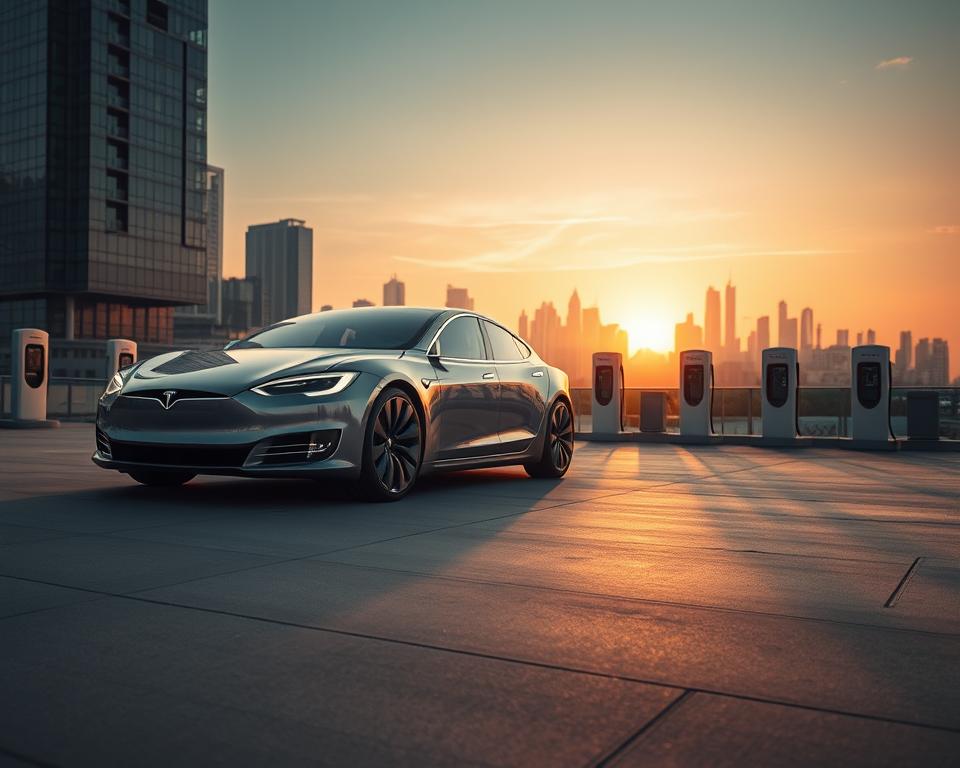
Tesla combines innovative designs with cutting-edge engineering to improve their electric cars. They use lightweight materials and a design that keeps the car low to the ground. This, along with the quick power you get from an electric engine, makes these cars fast.
Tesla’s own motor and inverter designs help adjust the car’s power for sporty models and those that go further on a charge.
Electric powertrain and battery advancements
Starting with the Roadster, Tesla has been updating its battery technology to high-density lithium-ion cells. Opening large factories helps lower costs and ensures they have enough materials for making lots of cars. They also worked on making batteries last longer and charge faster.
By making batteries better and cars more efficient, Tesla helps some models go really far on a charge. Things like regenerative braking and smarter heating and cooling also make these cars more efficient on the road.
Software-first features
In every Tesla, you’ll find a big touchscreen in a simple cabin that controls most car functions. Tesla can send new software over the internet to add features, improve safety, and manage battery life better — all without going to a dealership.
These updates can really change how the car feels to drive. Keeping the car’s software up to date makes Teslas get better over time.
Autopilot and Full Self-Driving
Autopilot started with features that help keep the car in its lane and adapt its speed to traffic. Over time, Tesla added abilities like suggesting lane changes, navigating highways, and parking. Even though Full Self-Driving has big goals like city driving and recognizing traffic lights, drivers still need to pay attention.
Tesla now uses cameras instead of radar for these features, backed by ultrasonic sensors. However, the names and safety claims of these systems have brought attention from regulators and the public.
| Area | What Tesla does | Customer impact |
|---|---|---|
| Powertrain | In-house motors and inverters with instant torque | Strong acceleration, responsive driving feel |
| Battery | Gigafactory scale, lithium-ion cell packs, thermal management | Improved tesla model range, lower cost per kWh |
| Software | Central touchscreen, OTA updates, integrated apps | New features and safety fixes delivered remotely |
| Autonomy | Camera-first Tesla Vision, Autopilot and FSD packages | Driver-assist convenience with continued need for supervision |
| Design | Minimalist interiors and distinctive exteriors | Polarizing aesthetics that generate high interest and preorders |
Efficiency and real-world advantages with supporting data
Electric cars are great for daily use, long trips, and saving money. They perform well on the road, offering good range and fast charging. Studies show they’re cheaper to run and better for the planet if you use green power.
Range and charging metrics
The first Teslas showed us EVs can handle long trips, going over 200 miles per charge. Now, the latest Teslas can go 250 to 350+ miles, depending on the model and how you drive.
A Supercharger can give you about 200 miles in just 15 minutes in perfect conditions. But charging times can change. It depends on how full the battery is, the weather, and the car and charger type. You’ll charge quicker if your battery’s low but slower as it fills up.
Cost and environmental impacts
Electric vehicles are simpler than gas cars, meaning they need less upkeep. This saves money on things like oil changes and brake repairs thanks to regenerative braking. Over time, these savings add up.
Choosing to charge your electric car with renewable energy greatly reduces its environmental impact compared to gas cars. Tools like Tesla Powerwall and solar charging stations make greener charging easier, helping the planet even more.
Manufacturing scale benefits
Tesla’s big factories and smart design lower the cost of batteries and cars. Making lots of batteries helps keep things running smoothly, even when parts are hard to get.
However, making more cars quickly can sometimes lead to issues with quality and delivery. But, in the long run, making more cars locally means they’re cheaper and get to customers faster.
| Metric | Tesla Typical Range (miles) | Charging Highlight | Ownership Advantage |
|---|---|---|---|
| Long-distance range | 250–350+ | Supercharger add ~200 miles in ~15 minutes | Reduced trip planning stress |
| Daily driving | 150–300 (most commuters) | Home charging overnight | Lower fueling cost per mile |
| Maintenance | N/A | Fewer fluid changes | Lower routine repair spend |
| Environment | N/A | Solar-integrated charging possible | Lower lifecycle emissions with renewables |
| Manufacturing scale | N/A | Gigafactory battery output | Lower per-unit cost, supply security |
Real-world performance can vary by Tesla model, your driving style, where you live, and how you charge. Before buying, look at true Tesla range and Supercharger locations to meet your needs for green and convenient transport.
Market positioning, competition, and sales strategy
The Tesla model uniquely blends high-tech allure with mass-market electric mobility. It rides high because of its powerful brand and the buzz from its product launches. Services that tie everything together also set the stage for what buyers expect. This clever mix not only attracts more people to look for Tesla models on sale but also keeps their value high over time.
Instead of using common franchised dealers, Tesla sells directly to its customers. This is done through stores owned by the company and an online platform. This setup means Tesla has full control over how much things cost, what’s in stock, and making sure customers are happy from the moment they order to when they get their purchase.
Tesla’s direct-sales and retail model
Tesla’s way of selling directly means the price you see online is what you get everywhere. Its stores basically show off its cars, but buying often happens over the internet. This, along with software updates you get from afar and a special network for charging, adds even more value after buying a Tesla. It also means less dependence on other companies for service.
Keeping everything under its own roof helps Tesla make better profits and avoid long supply chains. Building giant factories and making its own batteries set Tesla apart from older car companies that usually don’t make all their parts. This way, Tesla can quickly make updates and offer a smoother experience for its customers.
Competitive landscape
Bigger, old-school car makers like Ford and Volkswagen are now pushing out more electric cars. And then there are new companies like Rivian and Lucid aiming at the fancier parts of the market or unique niches. This heats up the competition for electric cars across different price levels and designs.
Yet, Tesla keeps an advantage with its top-notch software, wide-reaching charging options, and how well everything works together. Competitors are catching up by pouring money into electric car platforms, more charging spots, and tech features. As everyone tries to sell more cars, make better money, and build their services, the competition landscape is sure to keep changing.
| Factor | Tesla | Legacy OEMs (Ford, GM, VW) | Startups (Rivian, Lucid, Polestar) |
|---|---|---|---|
| Sales model | Direct online + company stores | Franchised dealers with growing online tools | Direct sales or limited dealer partnerships |
| Charging network | Proprietary Supercharger network | Third-party networks; expanding fast | Partnering on public chargers |
| Software & OTA updates | Advanced, frequent OTA | Improving, slower cadence | Aggressive in software differentiation |
| Manufacturing approach | High vertical integration, Gigafactories | Outsourcing + in-house mix | Contract manufacturing; selective integration |
| Impact on tesla model for sale demand | Strong brand momentum, visible launches | Price-driven promotions; wider dealer reach | High initial interest; limited volume |
| Threat level from electric vehicles competition | Moderate — first-mover cushion | High — scale and distribution | Moderate to high — innovation and niche appeal |
Buying considerations for consumers in the United States
When you plan to buy a Tesla, you need to look into availability, prices, and how to charge it. You also need to think about ownership, reselling the car, and its warranty. Depending on how many are made and what people want, different Tesla cars are available. It’s important to know when your Tesla will be delivered, especially if you need it soon. You might have to choose between a new or used car.
Availability and pricing
Start by checking Tesla’s online stock and when you can get your car. New car models can have wait lists. This makes used or available cars good for those in a hurry. When deciding on a Tesla, look into tax breaks and rebates. These can lower the price you pay. Rules around these discounts can change, so check the latest info.
Charging and ownership logistics
Setting up a charger at home is your first step. The type of charger and your home’s power will affect installation. Ask for cost estimates and how long it will take. For longer trips, find Superchargers along your way. This depends on your car’s range. Charging times can vary.
Think about paying for software updates or subscriptions. These can make your car better over time. Features like Full Self-Driving might be bought once or through a subscription. Weigh these ongoing costs against the benefits and resale value.
Resale and warranty
Teslas hold their value well, but software and licenses can change a used car’s worth. Find out if the software you buy goes with the car when sold. This can affect your car’s resale price.
Read the warranty details closely. Tesla offers a general warranty and extra coverage for the battery and drive unit. Know what’s not covered and what might cost extra. Keep records of service and software updates. This helps with reselling your car.
| Consideration | What to check | Impact on decision |
|---|---|---|
| Availability | Online inventory, local delivery times, used stock | Delivery speed and model choice |
| Price & incentives | Federal tax credits, state rebates, final purchase price | Effective cost and eligibility |
| Home charging | Panel capacity, electrician quotes, Level 2 setup | Daily convenience and charging costs |
| Long-distance charging | Supercharger access, tesla model range per trim | Route planning and travel time |
| Software & subscriptions | FSD purchase vs subscription, OTA updates, transferability | Feature set, recurring costs, resale value |
| Resale & warranty | Warranty terms, battery coverage, license transfer rules | Long-term ownership cost and resale price |
| Interior & practicality | Seating options, cargo and towing needs, test drive | Daily usability and family fit |
Risks, controversies, and regulatory landscape
The Tesla Model is at the heart of many debates. These include talks about safety, regulations, and how the company performs. Buyers should consider claims of self-driving, the car’s making history, and rules that may change. All of these can affect what the car can do and the owner’s experience.
Autonomy and safety
Features named Autopilot and Full Self-Driving are under watch. Regulators and safety groups are looking closely after serious accidents. Drivers need to keep an eye on the road as these systems don’t make the car fully self-driving by law.
Regulators in the US and Europe are watching these driver-help systems more closely. Changes in rules for autopilot could limit or change how software features work. This could need updates that change how the car acts in some places.
Technical choices and deployment
Tesla Vision uses cameras and computer brains instead of lidar. This decision influences what the system can do well and its weaknesses. Regulators and tech reviewers often talk about the need for more sensors, how it does in rare cases, and how updates are checked before everyone gets them.
Organizational strain
Wanting to make many cars fast sometimes doesn’t go as planned. Making the Model 3 fast showed problems in making the cars and checking them well. This led to delays and people looking closely at what was going wrong.
Wanting to make cars quickly and in large numbers can lead to issues. These can affect how good the cars are, when they get to customers, and how happy customers are. Problems with workers and getting parts can also make making lots of cars hard.
Leadership and reputation
What company leaders do and say affects how people see the brand. Media showing new car events and other big moments can risk the brand’s image. This is true even when a lot of cars are sold.
Market and legal variability
The rules for electric cars and self-driving features are not the same everywhere. What you can have in one place might not be allowed in another. This is because of different safety rules, pollution laws, or money-saving offers.
Practical checklist for prospective buyers
- Check which driver-assist features you can use in your area and how you get updates.
- Look at the latest service reports and if the Tesla you want is reliable.
- Think about how making the car fast might affect when you get it and how well it’s made.
- Stay aware of any rule changes for autopilot that might change how features work or what you’re responsible for.
Summary and final assessment of Tesla Model as a leader in sustainable transportation
The Tesla Model line has changed what we expect from eco-friendly cars. It combines great performance with long distances and updates from afar. The first Tesla Roadster proved that cars could go over 200 miles on one charge. Since then, Tesla has improved their cars and built the Supercharger network.
This mix of good driving, battery life, and charging spots makes the Tesla Model a top choice for those who care about the planet.
Besides cars, Tesla creates energy products like Powerwall, Megapack, and Solar Roof. By making these products, Tesla can reduce costs and encourage more people to use clean energy. Owners who use home solar power and battery storage with their Tesla car can help the environment and have a more reliable energy source.
Before buying, consider local charging stations, home charger expenses, and the choice of Full Self-Driving options. Market differences can affect the car’s total cost over time. If long distances, constant software updates, and built-in charging matter to you, the Tesla Model meets both performance and green goals.
However, there are risks. These include delays in production, legal issues with self-driving features, and how people view Tesla cars. Yet, the Tesla Model is ahead in green transportation if you consider its technical upsides against potential downsides of charging, savings, and updates.