
Anúncios
Most electric vehicles today can travel between 200 and 250 miles on a single charge.
Some new models in the U.S. can go over 200 miles. The best ones can reach up to 600 miles.
The age of the vehicle and battery size mainly decide how far an EV can go. Weather and how you drive also play a role.
There’s a rule. Cars must have a warranty for 8 years or 100,000 miles. Battery power tends to drop about 2% each year.
The range numbers you see for electric cars are based on perfect conditions. Real driving, which can involve different speeds and loads, often yields different results.
On average, electric cars today have a range of 110 to 300 miles. This number is slowly increasing thanks to advancements in technology.
To get the battery range, look at kWh capacity, how much energy you can use, and how efficient the vehicle is.
How you brake, the kind of charging, and your charging habits affect how far your car can go on a single charge.
Understanding the concept: Old way vs New way for vehicle range
The debate of old vs new shows changes in trip plans. Before, with gas cars, range was about tank size and gas mileage. Gas stations were everywhere. So, long drives needed little planning as one could quickly refuel.
Now, it’s about battery size in kWh and how efficient the car is. Electric cars’ travel distance is based on battery power and how fast they charge. They can go from 110 to 400 miles per charge, but usage affects this range.
Certain things change how far you can go on one charge. These include using the heater or AC, how you drive, and the road’s hills. Regenerative braking helps save energy in the city. Also, how and where you charge, plus the weather, can change your range.
Planning trips with an EV means balancing charging at home, work, and public fast chargers. There are fewer charging stations than gas stations. This means drivers need to plan using apps. For those still adjusting, plug-in hybrids provide a mix of gas and electric driving.
Looking at the old vs new, we see a move from easy refueling to managing how far we can go on a charge. Understanding energy use and planning for range are now key for electric car owners.
Workflow: How range is determined and tested
Range determination starts with looking at how much power a battery holds and how efficient the vehicle is. Engineers figure out the power available for use and how much power the car needs to go a mile. From these, they find a basic number for how far the car can go on one charge.
Labs test these numbers with set driving patterns. This way, all cars, whether from Tesla, Ford, or Chevrolet, can be fairly compared. The results become the numbers you see on EPA labels and on FuelEconomy.gov, helping you decide what car to buy.
Then, cars are tested on real roads. They are driven on highways, city streets, and a mix of both. This shows how things like speed, weather, and how much you’re carrying can change a car’s range.
How you charge your car also affects how far you can go every day. Slow charging adds about 5 miles an hour, while faster charging can add up to 25 miles an hour. The quickest chargers can give you 100–200+ miles in just 30 minutes. Car makers create charging plans that fill the battery quickly up to 80% and then slow down to keep the battery healthy.
Public charging stations and how easy they are to find are part of testing, too. Teams check if chargers are where you need them. They look at how using these chargers on trips or for daily needs changes the car’s range.
Cars are often rated by how much energy they use per 100 miles or how many miles they go per unit of energy. Road tests check if things like tires, how you drive, and using the heater or AC make those numbers go up or down from the lab tests.
| Phase | What is measured | Typical metric | Real-world impact |
|---|---|---|---|
| Battery lab test | Usable kWh and voltage behavior | kWh usable, SOC range | Sets baseline EV battery range used for labels |
| Standardized driving cycle | Energy per mile under defined speeds | kWh/mi or MPGe | Enables manufacturer comparisons |
| Road verification | Highway, city, mixed routes | Observed miles per charge | Shows deviation from lab numbers due to real conditions |
| Charging behavior test | Top-up patterns and charging curves | Miles/hr by Level 1/2/DC fast | Determines daily usable range and trip planning |
| Network usability check | Charger availability and compatibility | Station density, connector types | Influences practical range determination for long trips |
Key options: EV models and battery choices comparison
Choosing the right electric vehicle involves comparing model types and battery sizes with how you’ll use the car. Entry-level electric cars, with batteries around 40–60 kWh, are great for city living. They offer a range of about 110–200 miles per charge, ideal for short daily trips.
Midsize electric vehicles have batteries in the 60–90 kWh range. These models can travel 200–350 miles on one charge, fitting many family needs. They balance cost, space, and battery life for various driving habits.
For longer trips, consider cars with batteries over 90 kWh. High-capacity batteries allow some cars to go 300–600+ miles without recharging. These options are best for drivers who travel long distances regularly.
Plug-in Hybrid Electric Vehicles (PHEVs) have small batteries for 15–60 miles of electric driving plus a gas engine for longer journeys. PHEVs lower daily fuel costs and ease worries about running out of charge.
Cost is a big factor in buying an electric car. Prices for new models can start around $28,000. Federal tax credits and state rebates can greatly reduce the final cost for buyers.
Efficiency varies among vehicles. A 77.4-kWh sedan may exceed 360 miles per EPA measurements. In contrast, an 87-kWh SUV might only get just over 300 miles. This shows that a vehicle’s size and design impact how much battery capacity you really need.
The table below contrasts representative classes and outcomes to help readers see trade-offs in one view.
| Class | Typical Battery Capacity (kWh) | Common Range per Charge (miles) | Use Case | Cost Notes |
|---|---|---|---|---|
| Entry-level BEV | 40–60 | 110–200 | Urban commuting, short trips | MSRPs can start near $28,000; good for low-cost ownership |
| Midsize BEV | 60–90 | 200–350 | Family use, mixed driving | Balances price and usable battery capacity |
| Long-range BEV | 90+ | 300–600+ | Frequent long trips, minimal charging stops | Premium pricing for long range battery packs |
| PHEV | ~10–20 (usable) | 15–60 (electric only) | Short electric commutes with gasoline backup | Lower initial battery cost; gasoline extends total range |
Understanding real-world range goes beyond just battery size. How far a car goes also depends on charging stations, how it manages battery temperature, and its overall efficiency. Use this comparison to find an electric vehicle that matches your travel needs and budget.
Efficiency: Advantages of efficient EVs with supporting data
Efficient electric vehicles make every kilowatt-hour count. This lowers costs and extends the battery’s range. Tesla, Ford, and Hyundai have created systems that are highly efficient. They use compact motors, advanced power electronics, and smart software. Also, regenerative braking captures energy during stops, boosting the charge range in cities.
EVs need less energy to move than cars with gas engines. This cuts fuel costs for families and reduces energy bills per mile driven. Design improvements like better aerodynamics, reduced weight, and special tires lead to greater efficiency. These changes increase the battery’s real-world range.
Energy efficiency vs internal combustion
Electric motors use more of the energy from the grid than gas engines use from fuel. EVs are about three times more efficient this way. For example, efficient EVs can travel 200 miles for roughly $6, based on local electricity prices and the car’s efficiency.
How vehicle efficiency affects range
The efficiency of an EV is shown as kWh per mile. A lower kWh/mi means the car can go farther on a charge. But cold weather, heavy loads, and fast driving increase kWh/mi and reduce range. Cars designed with better thermal systems and aerodynamics maintain their range in different situations.
Real-world numbers
Two vehicles with similar battery sizes might have different EPA ranges. For instance, a 77.4 kWh vehicle might go 361 EPA miles. Another with 87 kWh could reach around 304 EPA miles. The differences come from the car’s size, its drag coefficient, and the tires used. At higher speeds, aerodynamic drag increases, which ups kWh/mi and lowers the range.
| Model example | Battery (kWh) | EPA range (miles) | Approx. kWh/mi |
|---|---|---|---|
| Tesla Model 3 Long Range | 75 | 358 | 0.21 |
| Hyundai Ioniq 5 Long Range | 77.4 | 303 | 0.26 |
| Lucid Air Grand Touring | 118 | 516 | 0.23 |
| Ford Mustang Mach-E Extended | 98.8 | 312 | 0.32 |
battery range
Battery range shows how far a car can go on one charge. Automakers use EPA or WLTP tests for a basic comparison. But these tests don’t always match what drivers find in real life.
Definition and measurement
EPA and WLTP tests check electric car range in set conditions. EPA’s method mixes driving types to get a standard number. WLTP has varied speeds and weighting, often giving higher figures than EPA for the same car.
Car makers use kWh and motor power to guess a car’s battery range. But actual range varies with speed, weight, and temperature changes.
Average and high-end ranges
Most new electric cars have a range of 200 to 250 miles. Cars made in 2022 or later usually go over 200 miles. The typical range is 150–400 miles, depending on the car’s battery and efficiency.
The best cars now reach over 300 miles. Some luxury or highly efficient cars can even get over 500 miles in perfect conditions. Plug-in hybrids have about 15–60 miles of electric-only range.
Factors that change the advertised number
High speeds and fast acceleration lower battery life fast. Driving fast uses more power and reduces efficiency compared to driving in the city.
Extreme weather affects battery life due to energy loss and the need for heating or cooling. Battery age and how often it’s charged play a role too. On average, batteries lose about 2.3% of their power each year.
Tire type, extra gear, hills, and more passengers can change real-world mileage. How you charge and battery limits also impact the actual range you get.
Battery capacity: kWh explained and what to look for
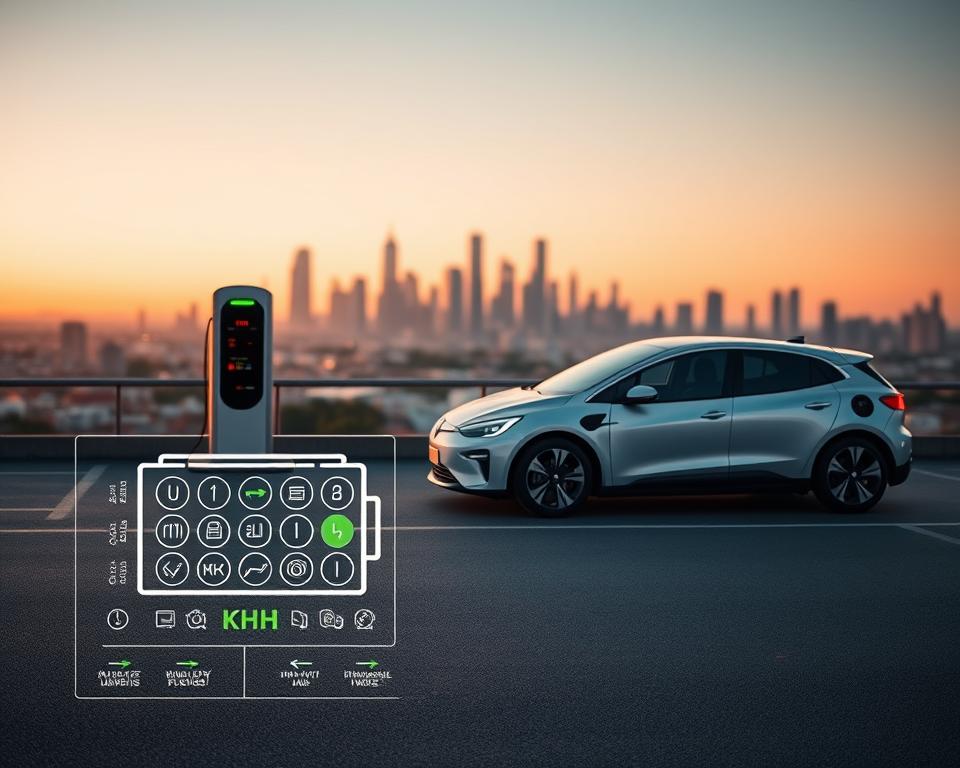
When you’re looking at electric cars, battery capacity is key. Think of kWh like a fuel tank’s size. Higher numbers generally mean you can drive longer between charges. Knowing about kWh helps you understand ads and official EPA numbers better.
Don’t just focus on the main battery capacity number. Manufacturers often talk about the total pack size but keep some back to make the battery last longer. It’s the usable kWh that really counts because it’s what gets your car moving. Knowing the usable power and how efficiently a car uses energy (kWh/mi) is more helpful than just looking at capacity.
Even if two cars have similar battery sizes, they can have different ranges. Things like efficiency, how much the car weighs, its shape, and how the motor is set up impact the distance you can go. For example, a car with a 77.4-kWh battery that’s very efficient might go farther than one with an 87-kWh battery that isn’t as efficient.
It’s wise to look into how the car manages its battery temperature and how it charges. Good cooling keeps the performance steady during long drives and quick charges. This can really affect how far you can go. For lots of people, paying a bit more for a car that can go a long distance on a single charge is worth it.
Here’s a quick list to help you compare cars:
- Usable kWh instead of just the total pack size
- EPA or WLTP range and what car owners actually say about it
- kWh per mile or kWh/100 miles to compare directly
- Battery thermal management and how it charges
Put this information into a simple table to see the differences clearly. Focus on how much power you can really use and how efficiently the car uses it. This will help you figure out what kind of range you can expect for your everyday driving. It’s a smarter move than just looking for the biggest battery.
Charging times and their effect on usable range
Charging your EV plays a big role in your daily life. Knowing how each charger type adds miles and impacts your battery is key. It lets drivers plan better for trips and keeps the battery healthy for longer.
Level 1, Level 2, and DC fast charging
Level 1 chargers are what you find in most homes. They give you about 5 miles for every hour of charging. Level 2 chargers are faster. They’re often at homes or workplaces, adding 20–30 miles each hour.
DC fast charging stations can boost your car by 100–200+ miles in just 20–30 minutes. But, the actual miles added can vary. It depends on your car’s battery size and how full it is to start with.
Fast charge behavior and battery health
Car makers have designed EVs to accept fast charging until the battery is nearly full. Then, they slow it down to take care of the battery. This slowing happens in the last bit of charging.
Using DC fast charging a lot and draining your battery often can harm it faster. It’s better to charge more slowly most of the time. This helps keep the battery strong and keeps your car going further for longer.
Top-up charging and practical routines
Charging a little at a time means you don’t often have to recharge from zero. Most people charge up overnight using Level 2. Then, they use DC fast charging for quick top-ups on longer trips.
The best way to take care of your battery is to use Level 2 most of the time. Save DC fast charging for when you’re traveling. This strategy is good for your battery. It keeps your car ready to go far, every day.
Factors that affect real-world range
Real-world EV battery range varies widely from lab numbers. Weather, driving style, vehicle setup, and terrain all affect how far an electric car can go on a single charge. Knowing these factors helps drivers plan better and have realistic expectations.
Weather and temperature
Cold air reduces chemical activity in lithium-ion cells and forces heaters to run. This use of heaters for the cabin and battery uses more energy, reducing range. Preheating cars like a Tesla, Ford Mustang Mach-E, or Volkswagen ID.4 while plugged in helps, but range still drops when it’s really cold.
Driving habits and speed
Driving fast and hard increases energy use per mile. Fast highway driving can use twice as much energy as slower city driving. Smooth driving, steady speeds, and regenerative braking, available in cars like the Hyundai Ioniq 5, can make your battery last longer.
Vehicle characteristics and terrain
The size, shape, and wheels of your vehicle affect its energy use. Big SUVs, such as the Rivian R1S, use more energy than smaller cars. Large wheels and soft tires increase resistance. Going up hills or towing uses a lot of energy, while easy routes and using regenerative braking save energy.
Maintenance and battery health also matter. Keeping tires properly inflated, brakes in good condition, and managing battery health keeps the car efficient. Over time, batteries can hold less charge, which reduces range.
This table shows how common factors impact energy use in everyday driving.
| Factor | Typical effect on consumption | Practical mitigation |
|---|---|---|
| Cold weather | 10–40% higher kWh/mi depending on temp and heating use | Preheat while charging; use seat heat over cabin heat |
| High driving speed | 15–50% higher kWh/mi at sustained highway speeds | Reduce speed; use cruise control where safe |
| Aggressive acceleration | 10–30% higher consumption in mixed driving | Adopt smooth throttle and regenerative braking |
| Vehicle size & aerodynamics | 10–40% depending on model and load | Choose aerodynamic trim; limit cargo weight |
| Terrain (hills, elevation) | Variable; steep climbs can spike usage by 20%+ | Plan routes to avoid sustained climbs; use downhill regen |
| Tire choice & pressure | 5–15% effect on rolling resistance | Fit low rolling-resistance tires and monitor pressure |
Battery lifetime, degradation, and warranty expectations
Knowing how electric vehicles (EVs) hold up helps people figure out their expenses. Manufacturers and studies give useful advice on battery life and the impact of its aging. How you charge, your driving climate, and car usage influence the EV’s battery range over time.
Expected lifespan
Most EV batteries last between 12 to 15 years under typical use. They’re made to go 200,000 miles before facing major issues. Often, owners won’t need to replace the entire battery pack.
Degradation rates and real-world data
On average, batteries lose about 2.3% of their capacity each year. Quick charging and letting the battery run low often can wear it out faster. But, if you avoid extreme charging and use, your battery might last longer without losing much power.
Warranty coverage
The law and car makers usually offer an 8-year or 100,000-mile warranty. Some places get even better deals, like 10 years or more. These warranties make sure the battery keeps most of its original strength, often around 70%, up to a certain point.
| Item | Typical Range | What Influences It |
|---|---|---|
| Expected battery lifetime | 12–15 years / up to 200,000 miles | Cell chemistry, thermal management, vehicle use |
| Average annual degradation | About 2.3% per year | Charging speed, depth of discharge, heat exposure |
| Common warranty expectations | 8 years / 100,000 miles; some 10+ years | Manufacturer policy, state rules, guaranteed capacity % |
| Practical effect on EV battery range | Noticeable after several years; small annual losses | Driving style, climate, charging behavior |
Range anxiety and practical mitigation strategies
Range anxiety is the worry that you’ll run out of charge before you get where you’re going. It’s a concern for people in the countryside, those living in apartments, and anyone who travels a lot. By knowing how far your car can go on a charge and adopting a few habits, you can swap stress for confidence.
This anxiety usually comes from not being sure about charging stations and how much energy you’ll use. It’s something new EV owners often feel, but those who’ve had their EV longer tend to rely on their experience and data. If you have a plug-in hybrid, having gas as a backup can make you feel better if things don’t go as planned.
Plan to reduce worry
Making good plans can help lessen range anxiety. Start by finding out how far your car really goes on a charge and think about how things like weather and speed might change that. Plan your route to include charging stations you trust, and aim to arrive with some charge left over.
Use EV charging tools
Apps from EV makers and others help you find charging stations, show you what kind they have, and tell you how long charging will take. The Alternative Fuels Data Center and network apps are great for planning longer trips. Remember to charge a little bit when you’re running errands to avoid getting too low on charge.
Home and workplace charging
Charging at home or work with Level 1 or Level 2 chargers usually means you don’t worry about daily range. Charging overnight usually gives you enough for the next day, making you less reliant on public chargers. If you can’t charge at home, try to find chargers at work or in the community to make each day easier.
Vehicle and battery choices
Choose an EV with a battery that suits how you use it. Most daily drives are short, so you might not need a huge range. But people who travel a lot might want to look at EVs with longer ranges or plug-in hybrids to make journeys easier and decrease the chance of needing to stop unexpectedly.
Practical habits
- Keep a 20–30% buffer when planning arrival state-of-charge.
- Use regenerative braking and lower speeds on long drives to improve range per charge.
- Identify reliable fast chargers along common routes before a trip.
By planning well and using EV charging tools, you can really cut down on range anxiety. Focus on understanding your car’s range, charge regularly, and choose the best car for your needs to make driving an EV easy.
What range fits your lifestyle: matching EV choice to use case
Finding the right electric vehicle depends on your weekly driving habits. Think about your daily drive, if you can charge at home, and your long trips. Picking an EV with the right battery range can save you money and worry. It also makes owning an EV more enjoyable.
People driving in the city usually need a small range. Entry-level electric cars with 40–60 kWh batteries offer 110–200 miles. They are perfect for daily city driving. If you have a Level 1 or Level 2 charger at home, you can easily charge your car overnight.
Those with kids or who drive for various needs look for more flexibility. Midsize electric cars, with 60–90 kWh batteries, give you 200–350 miles. This makes short errands and weekend trips easy without much planning. Always compare the car’s kWh, its EPA range, and how it does in real life when choosing.
People who often travel long distances need cars that go further or have backup. Cars with over 90 kWh batteries can travel 300–600+ miles, needing fewer charging stops. Plug-in hybrids offer both electric driving and gas engines for longer trips and easy refueling.
Cost is significant for most. Electricity can be cheaper than gas; an EV might only cost $6 for 200 miles. Federal tax credits and state benefits can also reduce the upfront cost. Remember to consider energy, maintenance, and incentives when thinking about total cost.
Look at WLTP or EPA figures, along with kWh and kW, to guess mile range. If long trips are rare for you, a midrange battery might be enough and save money. But if you often drive far, choose cars with longer battery life or fast charging options.
Do some practical checks: locate nearby fast chargers, make sure you can charge at home, and figure out your monthly driving. This will help decide which kind of EV—entry-level, midsize, long-range, or a plug-in hybrid—is right for your lifestyle.
Summary of key takeaways and buying considerations
Modern battery electric vehicles usually go about 200–250 miles on a single charge. The top-tier ones can even reach 600 miles. The range depends on several things: the size of the battery, how efficiently the vehicle uses power, how often you charge it, and even the weather. Sometimes, the actual distance an EV can travel is less than what’s advertised, so it’s wise to look at both official ratings and what other drivers say to know what to expect.
When thinking about buying an EV, look at the battery size, how powerful the motor is, and its efficiency. For many drivers in the U.S., a car with a decent range is enough for daily use. Having a Level 2 charger at home or access to quick public chargers can help a lot. It’s good to know that slow chargers add about 2–5 miles of range per hour, medium ones add 10–30 miles, and the fastest chargers can boost the range by 100–200+ miles in around half an hour.
To worry less about running out of battery, plan your travel around where you can charge. It helps to charge a little and often, especially since charging up to 80% is quicker and can be better for the battery. Batteries do wear out over time, losing about 2.3% of their capacity each year, so look at what warranty the maker offers. Typically, it’s 8 years or 100,000 miles. Plus, owning an EV usually costs less than traditional cars because they’re more efficient.
Before buying, make sure to check the actual battery size you’re getting, how far it can really go, and that you have a place to charge easily either at home or work. Also, see where the quick chargers are, understand the warranty, and remember to include possible incentives in your calculations. By following these steps, you can pick an EV that fits your life and keeps range worries to a minimum.