
Anúncios
Charging stations are crucial for reliable electric car charging at homes, workplaces, and on the road.
More than 61,000 public charging stations were available in the U.S. by early 2024. This growth was fueled by government support from NEVI, IIJA, and IRA.
There are three main types of electric vehicle chargers: Level 1, Level 2, and DC fast charging. Each type serves different needs and charging speeds.
For a successful setup, it’s important to consider the electric service capacity and permits. Connector compatibility and strong network management are also key.
This guide is for anyone in the U.S. looking to learn about electric vehicle charging. It’s for buyers, station hosts, and fleet managers.
We’ll look into connector standards such as J1772, CCS, CHAdeMO, and NACS. We’ll also touch on network protocols OCPP and OCPI.
You’ll find information on warranty and service deals, how to install them, and available incentives. These can help reduce costs for station hosts and fleet managers.
Understanding the Concept: Old Way vs New Way of Vehicle Refueling and Charging
Switching from gasoline to electric changes how we fuel up and where we do it. Before, we had gas stations that were easy to find and use. Now, charging can happen at home, work, or public places, allowing cars to charge overnight or get a quick power-up during a trip.
At a gas station, paying and pumping were straightforward, using the same nozzle everywhere. Electric charging brings different plug types, high-tech ways to start and pay for charging, and apps to help manage it all. This can make charging more flexible but also a bit more complicated, especially for long trips needing quick charging.
The supply of gasoline was all about big central systems and selling gas on location. Electric charging relies on spreading out charging points, working with the power grid, and smart charging to meet demand without overload. City planners and businesses now choose between slower chargers for everyday use and fast chargers for longer trips.
Fueling methods were once the same everywhere, which made things easy. Now, with electric cars, we have many plug types and charging standards. This means cars might need special adapters or chargers that fit all types. People and companies have to think about this to make sure they pick the right equipment.
Finding a place to charge has also evolved. Instead of looking for gas station signs, we now use apps and in-car systems to find charging stations, see if they’re available, and check the cost. More charging spots are popping up, making things better, but it’s not the same everywhere, which affects how quickly people choose electric cars.
Old Way vs New Way — Key Differences
- Access model: Gas stations were everywhere; now we use chargers at home, work, and public places on trips.
- Payment and data: Paying for gas was easy; electric charging connects to apps and accounts for smart billing and managing electricity use.
- Standards: One plug for all at gas stations; electric cars see many plug types and new standards to think about.
- Grid interaction: Gasoline didn’t worry about the grid; electric charging needs smart planning to keep the grid working well and costs low.
Workflow: How Charging Station Deployment and Use Operate
First, you pick a spot. This means walking through places like malls, office garages, and city parking. You look at how busy it is, the parking setup, if it’s accessible, and how much it’ll be used. It’s also key to chat with property owners about sharing profits so the chargers get used a lot.
Then, you really look into the location. This includes checking electrical capacity, wiring paths, and if you need more power or a new transformer. You have to decide where the charging stations and signs will go to help drivers.
Next comes getting permits and making sure everything is by the book. You need to apply for electrical permits and follow national electrical rules. You also must make sure your setup matches local accessibility and sign regulations. Since permit times can differ, it’s smart to have extra time planned.
After you’re all approved, it’s time to pick the equipment and service providers. Consider if you need fast chargers or the regular ones, based on how long cars park. Choose a network that supports open standards and easy payments. Check that connectors fit and meet requirements, especially if you’re using government funds.
Then, it’s about setting everything up with contractors and the power company. You need to arrange inspections, test everything, and update the system’s software. You also need to list your charging spot on public maps and make sure payments and network sharing work.
Last, keep the charging stations running smoothly. Use network tools to check on them, plan regular cleanings, and keep them updated. Keep an eye on money coming in and keep detailed records for every charger. This keeps everything working well for everyone.
| Step | Primary Actions | Key Deliverable |
|---|---|---|
| Site Selection | Foot traffic analysis, host agreement negotiations, ADA check | Location plan and host contract |
| Site Assessment & Engineering | Service capacity study, conduit routing, placement mapping | Electrical plan and site layout |
| Permitting & Compliance | Permit applications, NEC Article 625 compliance, local code checks | Approved permits and compliance checklist |
| Equipment Procurement | Choose Level 1/2/DC fast chargers, network provider, connector types | Procurement order and compliance documentation |
| Installation & Commissioning | Contractor coordination, utility inspection, firmware setup | Operational EV charging point and network registration |
| Operation & Maintenance | Monitoring, scheduled service, billing reconciliation | Maintenance logs and uptime reports |
Key Options: Comparison of Charging Equipment and Service Roles
When you’re picking a charging station, you have different levels to consider. Level 1 chargers are simple and cheap. They plug into any regular 120V outlet. They’re good for slow overnight charging at home. Level 2 chargers need a 240V outlet but are faster. They’re great for homes, workplaces, and public spots. For a quick charge at busy spots like transit hubs, DC fast chargers are the way to go.
How charging services work affects both users and businesses. Companies like ChargePoint and EV Connect provide tech support. They handle payments and keep the stations working smoothly. Places like Starbucks and malls offer space for these stations. They get customers to stay longer. For fleets, efficient charging schedules and managed energy use mean lower costs.
New charging options are also popping up. Wireless charging is cool for buses and certain fleets. It’s all about ease of use but isn’t widely available yet. Picking the right charger – a home dock, a wall-mounted Level 2, or a fast charger for highways – depends on your needs, space, and power availability.
| Option | Typical Use | Key Benefits | Limitations | Service Role |
|---|---|---|---|---|
| Level 1 (Portable) | Residential overnight charging | Low cost, simple plug-in | Slow charge rates; long refill time | Home owner installs; minimal networking |
| Level 2 (Wall or Charging Dock) | Home, workplace, public curbside | Faster daily charging; widespread compatibility | Requires 240V circuit and parking space | Hosted by retailers, workplaces, networked by providers |
| DC Fast Charging | Highways, transit hubs, commercial hubs | Rapid replenishment; supports long trips | High cost, grid impact, site prep needs | Managed by network operators and utility partners |
| Depot / Fleet Chargers | Fleet depots, transit yards | Optimized scheduling, lower operating cost | Limited public access; requires fleet management | Operated by fleet managers with load control |
| Inductive Wireless | Buses, shuttles, select fleet pilots | Automated, convenient charging experience | Less efficient; limited site availability | Installed by transit agencies and specialized vendors |
When choosing a charger, think about cost, how many people will use it, and its upkeep. A home charger is different from a fast charger on a highway. Charging docks at stores can make customers stay longer and spend more. Networks focus on keeping chargers working and handling payments.
What you choose depends on your routine. For everyday commutes, Level 2 chargers usually work well. If you drive long distances, fast chargers are key. And for fleets, choosing smart chargers can cut costs and manage electricity use better.
Efficiency: Performance, Cost, and Energy Data
The performance of chargers and demand shape investment in charging infrastructure. This section looks at how charging speed, use of the site, and grid effects play into cost and energy decisions for electric car charging setups.
Charging Speed and Energy Delivery
Level 1 offers about 1.9 kW, giving roughly five miles of range per hour. It’s good for home charging overnight when you don’t need much.
Home Level 2 gets up to 7.2 kW on a 30A circuit, giving about 25 miles per hour. Commercial Level 2 provides about 2.9 kW to 19.2 kW. DC fast chargers boost power a lot, with some reaching 500 kW. Often, fast charging stations can give 100–200+ miles of range in around 30 minutes.
Utilization and Geographic Data
By February 2024, the U.S. had over 61,000 public charging stations. Nearly 80% of these are Level 2, and DC fast charging makes up more than 20%. This growth is partly thanks to federal funding programs.
Access to chargers varies by area. Around 60% of city dwellers are less than a mile from a charger. For rural folks, it drops to about 17%. This affects how likely people are to buy electric cars in different places.
Operational Efficiency and Grid Impacts
Smart charging and managed load help avoid high demand charges at DC fast charge spots. These methods can also delay the need for expensive utility upgrades and lower operating expenses for fleets and businesses.
Tools like the EVI-X Toolbox and NEVI guidelines help plan for electricity needs. Standards such as OCPP and OCPI enhance how charging stations work together, helping users find stations more easily and making networks run better.
Product Review Criteria: What to Evaluate in Chargers and Solutions
When you’re picking equipment for a charging station, you need a clear list to check. Think about safety, how it works in real life, what network features it offers, and what kind of service it will need in the future. These points help fleet managers, those who run sites, and city buyers compare options well.
Safety and Compliance
Make sure to look for approvals from big testing labs like UL or Intertek. If efficiency is important, check if it’s ENERGY STAR certified. For projects with federal money, check if it meets Buy America rules and other specific guidelines.
Performance and Power Ratings
Start by comparing how powerful the charger is and its max current. Look at how the charge speed changes across different battery levels. Check how fast it can charge real cars, like a Tesla Model 3 or a Ford Mustang Mach-E, to see if it works as expected.
Network Features and Standards
Go for chargers that use OCPP so you can choose different vendors and still work together. Look for features like paying right at the charger, being able to check on it remotely, and updates through the internet. Make sure it works with other networks and payment systems to make charging easier everywhere.
Durability and Maintenance
Check how long the warranty lasts and what kind of service help you can get. If it’s for business, make sure there’s a service promise that includes how often it will work. Look at how easy it is to get parts, find local workers who can fix it, and if you can pay for regular maintenance checks.
Think about all the costs, not just the price of the equipment. Add up installation, any changes needed for utilities, fees for using a lot of power, and any fees per charge. Before you decide, see if there are any discounts or rebates that make the economics work better.
| Evaluation Area | Key Metrics | What to Verify |
|---|---|---|
| Safety | Certifications, code compliance | UL/ETL listing, ENERGY STAR, Buy America for federal projects |
| Power & Performance | Rated kW, amperage, charge curve | Peak output, real-world kW to target vehicles, thermal throttling |
| Network | Protocols, payments, remote ops | OCPP support, OCPI/roaming, payment gateways, OTA updates |
| Reliability | Warranty, SLA, MTTR | Warranty years, guaranteed uptime, local service partners |
| Costs | CapEx, OpEx, incentives | Installation fees, utility upgrades, demand charges, rebates |
Installation Considerations: Site Prep, Permitting, and Utility Coordination
Setting up a charging station needs good planning around the site, code, and utilities. Early choices determine the cost, timeline, and how users feel about the project. This goes for a single charger in a retail parking lot or many chargers at a rest area on the highway.
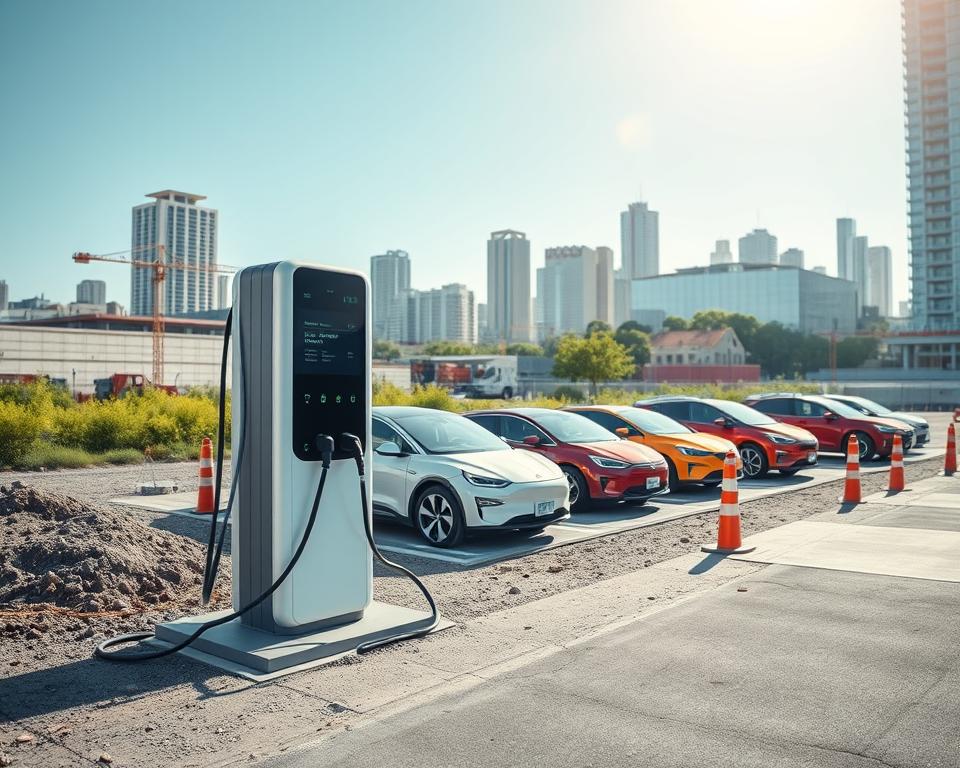
Site Assessment Details
Start by checking the electrical capacity and panel space with a walk-through. See if there’s three-phase service for high-power chargers and DC fast chargers.
Look over the parking layout for curb cuts, places for disabled parking, and where cables will go. Check how long cars stay and when the lot is used the most. This helps decide how many chargers you need and their power levels.
Permitting and Local Codes
Get the necessary permits early on. Following the National Electrical Code Article 625 helps decide on wiring and equipment for the chargers.
Plan for electrical permits and permission for signs. Rules for accessibility and how long things take can vary, affecting your project.
Utility Engagement and Incentives
Talk to your local utility before you finalize the design. They often need load studies for DC fast chargers and will help with transformer sizes and service upgrades.
Understand rate structures and demand charges to figure out costs. Use strategies like managed charging, on-site batteries, and demand-response to keep peak demand low. This cuts costs for public charging stations.
| Consideration | Key Actions | Impact on Project |
|---|---|---|
| Electrical Capacity | Audit panels, confirm three-phase availability, perform load study | Determines feasibility for high-power charging infrastructure and number of chargers |
| Site Layout | Plan ADA stalls, cable routing, signage, lighting | Affects user access, safety, and long-term maintenance for the charging station |
| Permits & Codes | Apply for electrical permits, meet NEC Article 625, secure local approvals | Controls schedule and may require design adjustments to comply with local codes |
| Utility Coordination | Request service upgrade quotes, submit load study, discuss demand charges | Impacts capital costs and informs need for a substation or transformer upgrade |
| Incentives & Funding | Evaluate NEVI, IIJA, IRS/IRA credits, state rebates, local grants | Can lower upfront cost for charging infrastructure and influence vendor selection |
| Peak Mitigation | Specify managed charging, battery storage, or demand-response programs | Reduces utility upgrade scope and operating expenses for high-power installations |
Connector Standards and Interoperability
Connector standards decide how people plug in their electric cars and how companies set up charging spots. Car manufacturers, network providers, and location owners need to think about what’s in use now and what might be popular later. This helps keep charging electric vehicles simple and dependable.
Common Connectors and Compatibility
In the U.S., most home and public chargers use the J1772 connector for AC charging of non-Tesla cars. This makes it a key part of daily charging needs.
The CCS connector leads the way for fast DC charging, chosen by many car makers. It allows for quick power delivery and combines AC/DC charging in one spot. This makes things easier at public stations and along highways.
CHAdeMO connectors are still around for some Japanese cars, but CCS is now the favored option for new DC stations. Tesla’s NACS is growing, reaching beyond its original network. It’s becoming more common thanks to adapters and use by other car brands. This changes which cars can charge where.
Implications for Buyers
It’s wise for buyers to select charging equipment that works with different types of cars or can adapt. This approach reduces the risk of having unusable chargers. It also ensures that more drivers can charge their vehicles at businesses.
Fleet managers need to know which chargers their vehicles can use, especially for fast charging. They should also look at what the vehicle manufacturers recommend, be it NACS or CCS. Networks that allow charging across different systems make things easier for everyone.
When setting up charging stations, think ahead. Plan to easily add NACS or extra CCS ports later. This foresight makes upgrading less expensive and more straightforward.
Public and Community Impact: Accessibility and Adoption Metrics
Public charging stations are changing how people travel and affecting local businesses. Having a charging station at a shopping mall or on a busy street makes people less worried about running out of battery. This also makes them think about using electric vehicles (EVs) every day.
In cities and rural areas, access to charging stations varies a lot. Most Americans live close to at least one public charging point, but the distance can be quite different. How close a charger is can influence if someone thinks it’s convenient to own an electric vehicle.
Government tax breaks and state grants are working to increase access in areas that don’t have many chargers. These efforts are placing chargers in public lots and shopping areas to make access more equal. Although rural spots are adding chargers quickly, they might still be far from an EV charging point compared to cities.
Access and equity
It’s important where chargers are placed to make sure everyone can use them. Putting charging stations near bus stops, affordable homes, and community centers helps people who can’t charge at home. Officials look at how people travel and live in an area to decide the best spots for these chargers.
Behavioral effects
Being close to electric car chargers can change what people think about them. If a charger is nearby, people are more interested in getting an EV. Seeing chargers often at the mall or in parking lots makes electric cars seem more normal and helps everyone support efforts to use less gasoline.
| Metric | Urban Areas | Suburban Areas | Rural Areas |
|---|---|---|---|
| Average distance to nearest charging station | 0.8 miles | 2.5 miles | 15 miles |
| County coverage (has ≥1 public charger) | 99% | 97% | 92% |
| Percent growth in public chargers (recent year) | 18% | 22% | 27% |
| Impact on EV consideration among nearby residents | High | Moderate | Moderate-High |
| Typical site types for public charging | Retail, municipal lots | Shopping centers, workplaces | Highway rest areas, town centers |
Cost and Funding: Pricing Models, Incentives, and Total Cost of Ownership
When you think about installing a charging station, you must understand the costs. These can change based on the type of equipment and site preparations needed. It’s important to look at the buying price, possible electrical work, and labor costs. Consider how much the station will be used and its service life too.
Upfront and Installation Costs
Level 1 charging stations are the cheapest. Level 2 chargers are more costly, needing special circuits and signs. DC fast chargers are the priciest. They might need big changes like new transformers, concrete pads, and utility updates.
Getting the site ready and the permits can cost extra. In cities, digging and labor can be more expensive. In rural areas, you might need to extend services or add long conduits.
Operational Costs and Revenue Models
Running costs cover electricity, demand charges, network fees, and maintenance. DC fast chargers can increase demand charges. Using energy management can help lower these costs.
There are many ways to price charging. Some use per-kWh rates, which matches the cost to the power used. Others charge by minute or session to encourage quick use in busy places. Subscriptions and fees change how money is shared between the site owner and network operator.
Incentives and Grants
Programs like NEVI, IIJA, and the Inflation Reduction Act offer money help. They can reduce the buying and installing costs. State and utility aid add more support for public and business projects.
Many aids need you to buy American and follow certain rules. Plan for the needed paperwork, compliance, and funding rules when thinking about your project’s money flow.
| Cost Factor | Level 1 | Level 2 | DC Fast |
|---|---|---|---|
| Equipment | $300–$1,200 | $3,000–$7,000 | $30,000–$150,000 |
| Installation | Minimal | Moderate (circuit, mounting) | High (transformer, trenching) |
| Operational Drivers | Low energy use | Routine electricity, network | High demand charges, maintenance |
| Common Revenue Models | Per-session or free for tenants | Per-kWh, per-minute, subscription | Per-kWh with idle fees, dynamic pricing |
Think about the total cost of owning a charger. Include warranty, expected working time, lifespan, and how much it will be used. Good planning and realistic cost and income guesses make for strong investment cases. This is true for public or business charging stations and electric vehicle charger setups.
Advanced and Emerging Technologies
New hardware and software trends are revolutionizing fleet operations and public EV infrastructure. These innovations are making it quicker to charge heavy-duty vehicles. They are also cutting the costs of installing sites and giving more flexibility to those running a charging station.
Megawatt Charging and Heavy-Duty Solutions
Development of the Megawatt Charging System aims for 3.75 MW charging for buses and trucks. This high power can greatly reduce waiting time, allowing for quicker trips and more efficient depot stops.
Installing MCS requires changes in site layout. Things like power upgrades, storing energy, and room for heavy-duty plugins need to be considered for fleet charging.
Inductive and Wireless Charging
Inductive charging is starting to be used for buses and shuttles. It’s being tested to see if it makes operating easier for those preferring not to plug in.
The U.S. Department of Energy is researching if this can be done at a higher power. Whether it’ll be widely adopted depends on how well it works, its safety, and cost over time versus traditional charging.
Smart Charging and Vehicle-Grid Integration
Smart charging uses timing, power management, and pricing to cut energy use when it’s most expensive. This reduces the cost for those running charging stations and eases the load on the electrical grid.
Tests with vehicle-to-grid connections are exploring new ways for grids to benefit and make money. By combining this with smart tech and renewable energy, the economics look good for places with many EV chargers.
Before choosing smart charging, operators should look at the software, how well different systems work together, and get good support. Keeping communications and data safe is also key for smooth, secure operations.
Operation and Maintenance Best Practices
Keeping a charging station network running well is key. It makes the network reliable and easy to use. Quick fixes and clear updates make drivers trust the service. Tools to track how things are going and share info on sites like PlugShare and ChargePoint are useful.
Monitoring and Reporting
Use network software to watch uptime, session counts, and errors as they happen. This helps find problems fast and keeps machines working longer.
Tell national locators and fleet managers how available chargers are. Clear reports help plan for more charge points and manage power use better.
Routine Service and Safety Checks
Set up regular checks for plug ins, cable wear, and seal health. Cleaning and making sure everything’s earthed right makes charging safer.
Update software and keep logs of the work. Saving these records helps with warranty or audit issues, keeping manufacturer support.
Get ready for seasonal needs. Plan for things like snow removal and how cold affects batteries at outdoor charging places.
Customer Experience and Support
Make sure to put up clear signs and share costs at chargers. Let customers pay by kWh or by minute if it’s allowed.
Allow different payment ways and access across major networks. Train your team to quickly solve basic problems and know when to ask for more help.
| Area | Best Practice | Impact on Operations |
|---|---|---|
| Monitoring | Real-time telemetry, uptime dashboards, locator feeds | Faster fault detection, higher availability |
| Routine Service | Scheduled inspections, connector cleaning, firmware updates | Extended equipment life, preserved warranties |
| Safety Checks | Ground tests, enclosure integrity checks, thermal scans | Reduced safety incidents, regulatory compliance |
| Logistics | Vendor SLAs, spare parts inventory, seasonal plans | Quicker repairs, consistent uptime for charging infrastructure |
| Customer Support | Clear pricing, multiple payments, roaming support | Higher user satisfaction and repeat use of charging station |
Summary and Product Recommendation Guidance
This section outlines smart choices for charging at home, work, and public places. For your home, go for a Level 2 electric vehicle charger. It should have good networking for scheduling and checking on it remotely. Always have a Level 1 cord on hand for backup. Make sure it fits non-Tesla cars or get adapters for Tesla ones.
For workplaces, pick Level 2 EV charging stations that can manage power load and control access. They should also let you bill employees. To save on costs, look into shared cost models and check if there are any state or local incentives. Smart features help keep the systems running smoothly and make management easier.
Public spots and fleet operations should get fast charging stations that fit the expected use and types of vehicles. Offer different connector types or adapters for CCS and NACS. Smart charging tech can help avoid high-power costs. When picking suppliers, make sure their gear fits your site’s power setup and supports OCPP/OCPI. Also, check warranties and if there are any incentives to help with costs.
Lastly, charging setups in the U.S. need to work well, play nice with others, and meet certain rules. This includes checking if they qualify for Buy America. Picking the right setups ensures your charging stations work reliably. It also keeps them up more and meets rules for getting funding. This matters for home, workplace, and public fast charging points.